
Songkran Festival:
Thailand’s Famous Festival of Water
Songkran Festival, also known as the Thai New Year or the Festival of Water, is one of Thailand’s most iconic celebrations. Held annually in April, Songkran is famous for its joyous water fights, traditional rituals, and vibrant street celebrations.
The festival is also a time for meaningful traditions and reflection. Families gather to honour elders, participate in sacred rituals, and share meals that celebrate Thailand’s rich culinary heritage. Each Songkran experience, whether a lively street water fight or a quiet temple visit, offers a glimpse into Thailand's vibrant culture and community spirit.
At Banana Tree, we're bringing the spirit of Songkran to our guests with delicious Thai flavours and a celebration inspired by Thailand’s New Year traditions – full of colour, culture and community spirit.
The Meaning Behind Songkran
Songkran originates from the Sanskrit word (an ancient language) saṃkrānti, meaning "to move", "to pass", or "astrological passage". For Thai people, it’s a time to honour ancestors, pay respect to elders, and purify the spirit. Water plays a central role in the festival, it represents washing away the old year’s misfortunes and welcoming new blessings.
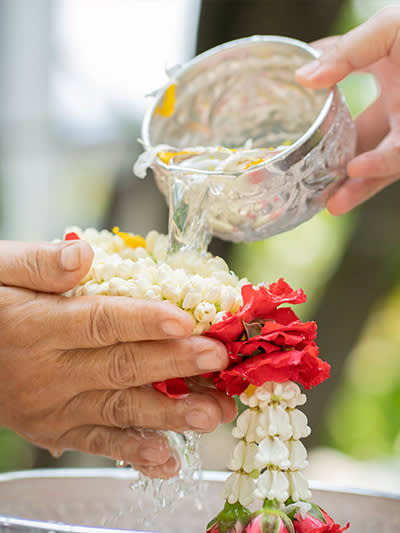
Traditionally, families gather to pour water over Buddha statues and the hands of elders, a gesture of respect and goodwill. Beyond the rituals, Songkran is about community, generosity, and togetherness, bringing locals and visitors together in celebration.

Cultural Traditions During Songkran
- Water Pouring Ceremonies: A traditional ritual where water is gently poured over Buddha statues or elders’ hands as a sign of respect, symbolising cleansing, renewal, and blessings for the year ahead.
- Sand Pagoda Building: Temples often host sand pagoda (Chedi Sai) building, where locals create decorated sand structures as an act of merit-making and devotion.
- Family Gatherings: Songkran is an important time for reunions, with many Thai people travelling back to their hometowns to spend time with family and enjoy shared meals.
- Street Festivals and Parades: Cities like Chiang Mai and Bangkok come alive with music, parades, cultural performances, and the famous Songkran water fights enjoyed by locals and tourists alike.
Jasmine Flowers:
A Symbol of Love and Respect
Jasmine flowers hold a special place in Songkran celebrations. Known for their delicate fragrance and pure white petals, jasmine symbolises love, respect, and purity in Thai culture. During the festival, families often use jasmine garlands to honour elders, drape over Buddha statues, or decorate homes and temples.
The sweet scent of jasmine is also believed to bring good fortune and blessings for the New Year. Offering jasmine is a gesture of gratitude and devotion, reinforcing the festival’s themes of family, respect, and renewal.


Songkran and Thai Cuisine
Food is an essential part of Songkran celebrations. Traditional dishes are fresh, vibrant, and perfect for sharing with family and friends. Some popular Songkran foods include:
- Green Papaya Salad (Som Tum): A zesty, crunchy salad that balances sweet, sour, and spicy flavours.
- Massaman Curry: Rich and aromatic, with tender meat and peanuts, reflecting Thailand’s diverse culinary influences.
- Sticky Rice with Mango: A sweet dessert symbolising prosperity and happiness, enjoyed by many during the New Year celebrations.
These dishes are not only flavourful but also reflect the seasonal ingredients and regional diversity of Thailand. Enjoying these dishes together during Songkran reflects the festival’s spirit of community and togetherness.
Water: The Heart of Songkran
Water is the defining feature of Songkran, giving the festival its nickname, the Festival of Water. Traditionally, water symbolises purification, renewal, and blessings.
In modern celebrations, water becomes playful and communal, with locals and visitors taking to the streets to splash each other during lively water fights. Beyond fun, water also helps people cool down during Thailand’s hottest month, making it both practical and symbolic. Whether in sacred rituals or spirited street celebrations, water captures the joy, connection, and cleansing spirit at the heart of Songkran.

Experiencing Songkran Today
While the water fights have become a worldwide symbol of Songkran, the festival remains deeply rooted in cultural and spiritual practices. Visitors can enjoy traditional ceremonies, explore temple events, and taste authentic Thai cuisine.
For food lovers, Songkran is a perfect time to discover Thailand’s culinary richness, from spicy salads and curries to sweet desserts. Each dish tells a story of heritage, flavour, and festive joy.
Celebrate the Spirit of Songkran at Banana Tree
If you want to experience the flavours of Thailand and the festive spirit of Songkran without a plane ticket, Banana Tree’s Thai Bottomless Bowls are the perfect way to bring the celebration to your table. Each bowl is carefully crafted with Thai ingredients, capturing the vibrant tastes and aromas that make Thai cuisine so beloved around the world.
Whether you’re looking to try something new, celebrate a special occasion, or simply enjoy a taste of Thailand’s culinary traditions, Banana Tree’s Thai Bottomless Bowls make it easy to immerse yourself in the Songkran experience. With fresh, flavourful ingredients and generous portions, they’re perfect for indulging in the joy, colour, and spirit of the Festival of Water.
FAQs
Songkran takes place every year in mid-April, usually from April 13th to 15th. Some regions of Thailand celebrate for longer, extending up to a week.
Songkran marks the Thai New Year and symbolises cleansing, renewal, and respect for elders. Water plays a central role in washing away bad luck and welcoming good fortune.
The water fights have cultural roots in purification rituals. Gently pouring water over statues of Buddha or elders originally symbolised cleansing and respect. Over time, it evolved into playful water fights that is now famous worldwide.
Popular Songkran dishes include: Green Papaya Salad (Som Tum), Massaman Curry, and Sticky Rice with Mango.
Jasmine flowers symbolise love, purity, and respect. They are used to honour elders, decorate Buddha statues, and bring blessings for the New Year. Jasmine is also incorporated into traditional dishes and drinks, adding fragrance and meaning to the celebration.
You can enjoy Songkran’s spirit by celebrating with Thai food, music, and cultural traditions at home or at restaurants that bring Thai experiences to their guests. Join us at Banana Tree for Thai Bottomless Bowls to experience a taste of Thailand’s vibrant flavours and celebrate the festival in style.